
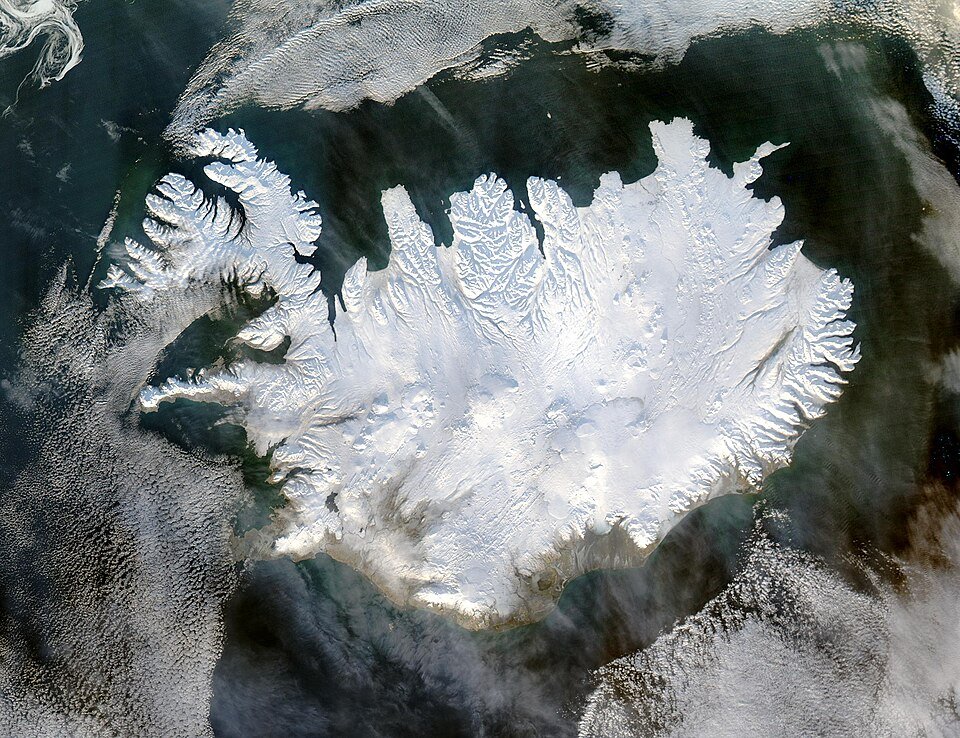
Credit: Wikimedia Commons
On August 29, Iceland’s voters rejected restarting negotiations to join the European Union. Results showed that 52.8% voted no compared to 47.2% yes. This vote is in the shadow of ongoing threats by the U.S. President Donald Trump to take control of nearby Greenland. However, despite the results, Iceland didn’t vote against Europe, but rather for its own special relationship with the EU, based on history and cooperation.
Iceland’s History with the European Union
In 1970, Iceland entered the European Free Trade Association. This group includes Liechtenstein, Norway, and Switzerland and removes barriers to trade in industrial goods. However, each nation maintains its own commercial policy towards countries outside the group. This group was created to exist outside the European Union.
In 1992, Iceland joined Norway, Liechtenstein, Sweden, Austria, and Finland in signing the European Economic Area Agreement (EEA) with the European Union, with formal entry in 1994. This extended the EU’s internal market and ensured the free movement of goods, workers, capital, and services. This agreement also means that the EU’s internal market rules apply to Iceland. However, some aspects of the EU fall outside the scope of the EEA agreement, including the EU’s common customs and trade policy, its common agricultural and fisheries policy, the EU’s Economic and Monetary Union, and its Common Foreign and Security Policy. Currently, about 75% of Iceland’s laws align with EU legislation across social, environmental, and economic sectors. The EEA currently enjoys broad support in Iceland, including all political parties in Parliament. Iceland also fully implemented the Schengen Agreement on March 25, 2001. This ended internal border checkpoints and controls, giving the people of Iceland access to EU countries. Now, the EU is a significant trading partner of Iceland’s, accounting for 53.6% of Iceland’s total trade and receiving about 66.5% of its exports.
In the early 21st century, the Social Democratic Party sought full membership in the EU following the 2008 financial crisis. Its goal was to stabilize the country’s economy and secure monetary stability through the Euro. In July 2009, the legislature narrowly approved a proposal to seek EU membership and submitted its formal application a week later. However, after the 2013 election, the new right-wing government, a coalition between the Progressive Party and the Independence Party, cancelled the country’s application for EU membership, suspending the accession process. However, the European Commission considers the application to still be valid, with negotiations on hold.
Arctic Security, the Greenland Crisis, and Iceland
The shifting security situation in the Arctic and the European region has reignited conversation of EU membership. Russia’s invasion of Ukraine and increasingly assertive position in Arctic waters has raised security concerns among the Icelandic people. This is particularly true with the GIUK Gap, the maritime chokepoint formed by Greenland, Iceland, and the United Kingdom.
Furthermore, starting in 2019, US President Donald Trump has suggested buying Greenland, later escalating to threats of annexation in January 2026. Additionally, at the World Economic Forum in Davos, Switzerland in January 2026, Trump confused Iceland and Greenland, suggesting that NATO refused to support Trump’s aspirations to buy Iceland, when he meant Greenland.
These developments have raised concerns about security in the Arctic region, as Iceland has no standing army and relies heavily on the United States and NATO for defense and security. However, Trump has cast doubt on the US commitment to NATO. Additionally, the United States is now seen by many as a less reliable ally due to its threats surrounding Greenland, comments undermining NATO, and unpredictable foreign policy.
The Current Situation
In November 2024, the center-left and center-right liberal parties, who both favored accession to the EU, achieved a major victory in parliamentary elections. Because of this, the new coalition government announced that a referendum on whether or not to open EU accession talks would be held no later than 2027.
In light of this, a referendum on restarting EU accession talks was held on August 29, 2026. While the referendum was nonbinding and did not legally commit the government to any action, Prime Minister Kristrún Frostadóttir pledged that a “no” vote would end any further discussion of EU accession for the remainder of her term. The referendum was defeated 52.8% to 47.2% and was fairly representative of the population, as more than 82% of voters, 225,031 people, cast ballots.
Supporters focused on security in their campaign, believing that EU membership would provide the country greater protection if Trump ever threatens Iceland. Because Iceland does not have a standing military, the European Union’s mutual defense clause was seen as an important backup in guaranteeing Iceland’s security, after NATO. Supporters also said that EU membership would lower inflation and interest rates while the Euro would bring more stability than the current system. They also saw EU membership as crucial to tackle global issues, like climate change. Furthermore, under the EEA, Iceland is already subject to many of the EU’s rules and regulations, but lacks votes in the European Parliament, a role in the European Commission, and access to certain EU subsidies and funds.
The opposition campaign heavily focused on Iceland’s fishing industry, which accounts for 15% of its GDP and 40% of its export revenues. The “no” campaign claimed the fishing industry would be threatened by EU membership. Between 1958 and 1976, there were confrontations between Iceland and the UK known as the Cod Wars over exclusive fishing rights within a 200-mile zone of the country. This conflict established a historical precedent for encroachment on fishing rights by foreign powers. Now, the fishing industry feared that the bloc’s common fisheries policy would open its waters to foreign fishers and Iceland would lose control over its quota system, hurting the local fishing industry. Leading up to the referendum, Icelandic leaders participated in negotiations regarding the fishing industry. While the European Commission signalled it was open to a modified fisheries settlement and potential exemptions, they acknowledged that a full formal exemption would be unusual. Meanwhile, Iceland already benefits from EEA membership and Schengen membership without compromising its sovereignty. Finally, the “yes” vote was ultimately less decisive, as it was a vote to begin negotiations, not to join the EU. A second referendum would have happened later to officially vote on joining the EU.
The vote also signalled a strong regional divide between Reykjavik, Iceland’s capital, and the rest of the country. Reykjavik was the only area where a majority supported the referendum. Meanwhile, voters in rural constituencies voted against the referendum, with 62.9% in the Northwest, 61.2% in the Northeast and 60.5% in the South. This reflected the particular importance of fisheries and agriculture in rural areas, as decisive parts of the no campaign.
Conclusion
Despite the referendum result, Iceland’s rejection of the EU is not a rejection of Europe. As a member of the European Economic Area and the Schengen passport-free travel area, Iceland is already heavily involved with Europe. The country already accepts free movement of goods, capital, and services; its markets are EU-regulated; and its social and environmental standards are those of the EU. Because of these benefits, many Icelanders, particularly those concerned about fishing rights, saw no added benefits from joining the European Union. Instead, the people are happy with the EEA agreement. Therefore, the government will likely now focus on strengthening its existing ties with the European Union through the European Economic Area agreement.
This is further established by the responses of Icelandic leaders. Guðrún Hafsteinsdóttir, the leader of the opposition Independence Party who opposed the measure, explained that the result was not a blow to European relations as “we want to remain in close contact with the European Union, Europe and as many other countries as possible.” However, “the nation is sending a clear message that we intend to steer that course ourselves.” Meanwhile, Prime Minister Kristrún Frostadóttir saw the result as a win for democracy because of the high turnout and will respect it.
Despite this, the result will likely be viewed as a disappointment to the EU, which was hoping to increase its representation in the Arctic, a region of political and strategic importance to the bloc. Furthermore, a move by Iceland towards membership would have sent a signal of European unity to the world, especially amid tensions between the US and Europe as well as the growing threat posed by Russia. Finally, Iceland is a wealthy country, and its inclusion would boost the reputation of the alliance at a time when it is focused on recruiting new member states.
Therefore, the results of the referendum should not be seen as a win for Euroscepticism, as interpreted by far-right politicians, including Nigel Farage and Marine Le Pen. Rather, it can be interpreted as part of Iceland’s unique relationship with the European Union, built on decades of history, integration, and cooperation. For the time being, a majority determined that the current system was preferable, with its extensive access to European markets and institutions.
About The Author
